

Watercolours
Edward Brian Seago (1910-1974)
The Piazzetta, Venice, Italy
Medium: Watercolour
Provenance: Signed
Image Dimensions: 22½" x 15½" (57.2cm x 39.4cm)
Price:
£14,500.00
This masterful watercolour of The Piazzetta in Venice by Edward Brian Seago (1910–1974) is a quintessential example of the artist’s celebrated ability to capture light and atmosphere. Seago, arguably one of Britain’s most popular 20th-century landscape painters, was a frequent visitor to Venice. This piece demonstrates his extraordinary skill in translating the city’s unique “aquatic” light into paint, using a sophisticated economy of brushwork that brings the bustling heart of the Venetian Republic to life.
In this composition, Seago focuses on the iconic Piazzetta, the ceremonial gateway to the city, framed by the grand architecture of the Doge’s Palace and the Biblioteca Marciana. He employs a hallmark “wet-on-wet” technique, allowing the pigments to bleed softly into one another to suggest the hazy, humid atmosphere of the lagoon. His brushwork is notably rapid and confident; he uses minimal strokes to define complex architectural features and the distant masts of gondolas, relying on the viewer’s eye to complete the scene. This impressionistic approach gives the work a vibrant, “on-the-spot” energy that a more laboured studio painting would lack.
The palette is a subtle study in tonal harmony, dominated by the warm, sun-bleached ochres of Venetian stone and the cool, translucent blues of the Italian sky. Seago’s mastery of “negative space”—leaving areas of the paper untouched—allows the brilliant Mediterranean sun to radiate from the page. The figures scattered across the square are rendered with mere flicks of the brush, yet they perfectly convey the movement and scale of the space, grounding the grand architecture in the reality of daily Venetian life.
For the collector, a Seago watercolour of Venice represents a blue-chip addition to any collection of British Modernism. Seago enjoyed the patronage of the British Royal Family and was a favourite of the Queen Mother, a testament to the timeless appeal and technical excellence of his work. This particular piece, with its sought-after subject matter and exceptional handling of light, serves as both a beautiful decorative object and a significant investment in the legacy of one of the 20th century’s most beloved landscape artists.
We don't currently have any other pieces by this artist in the gallery. By following them, you'll receive an email notification as soon as any new acquisitions arrive.
Follow Artist-
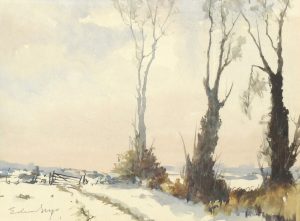
Edward Brian Seago (1910-1974)
Winter Landscape
Medium: WatercolourProvenance: SignedImage Dimensions: 14" x 10" (35.6cm x 25.4cm) -
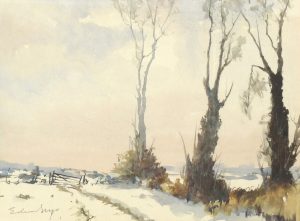
Edward Brian Seago (1910-1974)
Winter Landscape
Medium: WatercolourProvenance: SignedImage Dimensions: 14" x 10" (35.6cm x 25.4cm) -
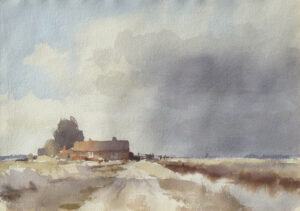
Edward Brian Seago (1910-1974)
A Norfolk Farm
Medium: WatercolourProvenance: Inscribed on reverseImage Dimensions: 14¾" x 10½" (37.5cm x 26.7cm) -
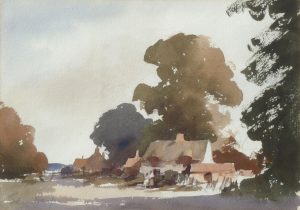
Edward Brian Seago (1910-1974)
Cottages near Ingham, Norfolk
Medium: WatercolourProvenance: SignedImage Dimensions: 14¾" x 10½" (37.5cm x 26.7cm) -
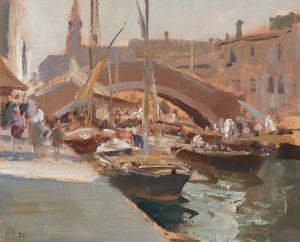
Edward Brian Seago (1910-1974)
La Vena Canal, Choggia, Venice
Medium: Oil on panelProvenance: Signed & Inscribed on ReverseImage Dimensions: 10¼" x 8½" (26cm x 21.6cm)
Contact us on 01935 814465 or use the form below.
You May Also Like
-
 Oil Paintings
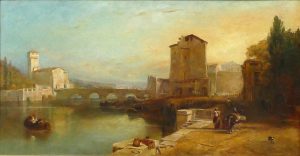
The Ponte a Visconti & Tower, Italy
Medium: Oil on canvasImage Dimensions: 21" x 41¼" (53.3cm x 104.8cm) -
 Watercolours
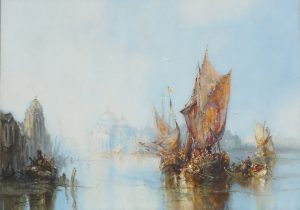
View in Venice, Italy
Medium: WatercolourProvenance: SignedImage Dimensions: 20½" x 20½" (52.1cm x 52.1cm) -
 Antique Maps
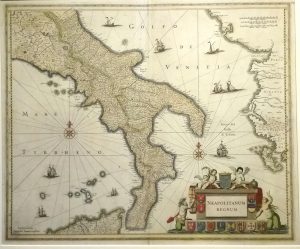
Antique Map of Neapolitanum Regnum; Southern Italy by Jan Jansson
Dated: c. 1650Image Dimensions: 21" x 17½" (53.3cm x 44.5cm) -
 Antique Prints
Subiaco – & old Roman Bridge on the Anio, The Rocca dei Borgia
Medium: LithographDated: c. 1820Image Dimensions: 13" x 9¼" (33.02cm x 23.5cm)