He was a distinguished British watercolourist and military officer, celebrated for his evocative depictions of the English landscape and international vistas.
Born into the notable Coleridge family, he initially pursued a career in the British Army, serving as an officer in the 25th King’s Own Borderers. His military service took him across the globe—from the rugged landscapes of Canada to the sun-drenched shores of Malta and Gibraltar—where he meticulously sketched his surroundings, forming the foundation of his artistic practice.
Upon retiring from the army, Coleridge settled in Twyford, Berkshire, to focus entirely on his art. He became a prolific figure in the late-Victorian art scene, exhibiting over 350 works at prestigious venues including the Royal Academy, the Dudley Gallery, and Walker’s Gallery in London.
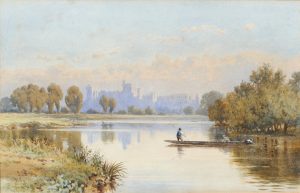
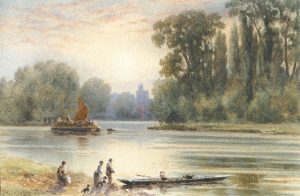
Coleridge is best known for his atmospheric, small-scale watercolours of the Thames Valley. His work is defined by a delicate handling of light and a keen interest in the reflections of the River Thames, often capturing iconic views of Eton College and Windsor. Beyond his local scenes, his portfolio includes significant works from his travels through Italy, Normandy, and North America.
Today, his paintings serve as both an aesthetic triumph and a vital historical record of pre-industrial river life. His works are represented in major public and private collections, including the British Museum and the national archives of Canada.